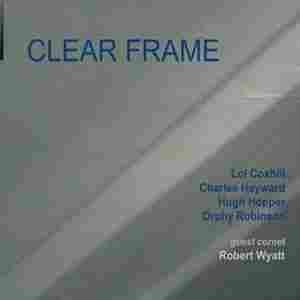
Płyta jest nowa, nieużywana, nieskazitelna. Bez wad, bez odcisków palców, zagięć poligrafii itp.
Edycja : digipack.
Folia z paskiem samoprzylepnym.
Track Listing: Clean Slate; Tin Plate; Noise Gate; Void Crate; High Rate; Better Late; Paperweight; Figure Eight.
Personnel: Lol Coxhill: soprano sax; Orphy Robinson: vibraphone; steel pan, percussion, FX; Hugh Hopper: bass; Charles
Hayward: drums, keyboard; Guest: Robert Wyatt: cornet.
This coming together of Lol Coxhill, Orphy Robinson, Hugh Hopper and Charles Hayward on record is nothing but cause for
celebration, especially in view of the fact that Robert Wyatt guests on cornet. The music produced by the group is an
amalgam of their disparate musical personalities, which is just as it should be in the cooperative sense. The chances are that a lot of listener's expectations will be confounded by the music, but in a profound way that's a
good thing, symptomatic as it is of musicians moving on almost restlessly but governed always by the most worthwhile
aspects of human creativity. In view of this the sheer formlessness of "High Rate" exemplifies a constructive inability
to stay in one place and in view of the music's organic feel it's unsurprising that the piece ends with a fade.
"Better Late" also exemplifies that quality but Coxhill's innate lyricism comes to the fore in a way that's not always
true elsewhere. It's probably been said before that his soprano sax playing is a musical equivalent of DNA but it
deserves repeating. When Wyatt comes on like an English Don Cherry over the backdrop of Robinson's shimmering vibes the
vista evoked is unique. The vexing question of how he got trombone-like sonorities out of his horn simply isn't worth
troubling over. Suffice to say that Robinson's FX credit might be more than justified in this instance, although when
heard straight Wyatt's playing comes on like a particularly English take on Chet Baker's melancholy.
The bass-drums cartel of Hugh Hopper and Charles Hayward combines on "Tin Plate" to loosely anchor an essentially
freewheeling piece in which the instrumental voices vie for attention, but scrupulously avoid being clamorous. The
balance thus struck is a fine one, and the fade-in of the following "Void Crate" lends proceedings an amorphous air, as
if the music exists outside of the usual constraints of time and indeed those imposed by flagging inspiration.
Although the point regarding how long all of these musicians—with the exception of Robinson—have been in the game of
creative music is a valid one it's far from being so in any derogatory sense. What we have here is a potent argument for
staying power and longevity